

Table of Contents
As electricity demand continues to rise and extreme weather events become more frequent, power outages are becoming a growing concern for homeowners and businesses alike. A solar power backup system offers a reliable and sustainable solution by storing energy and providing electricity when the grid is unavailable. But before investing in one, there are several important things you should know.
What Is a Solar Power Backup System?
A solar power backup system combines solar panels, an inverter, batteries, and an energy management system to provide electricity during blackouts or periods of high energy demand.
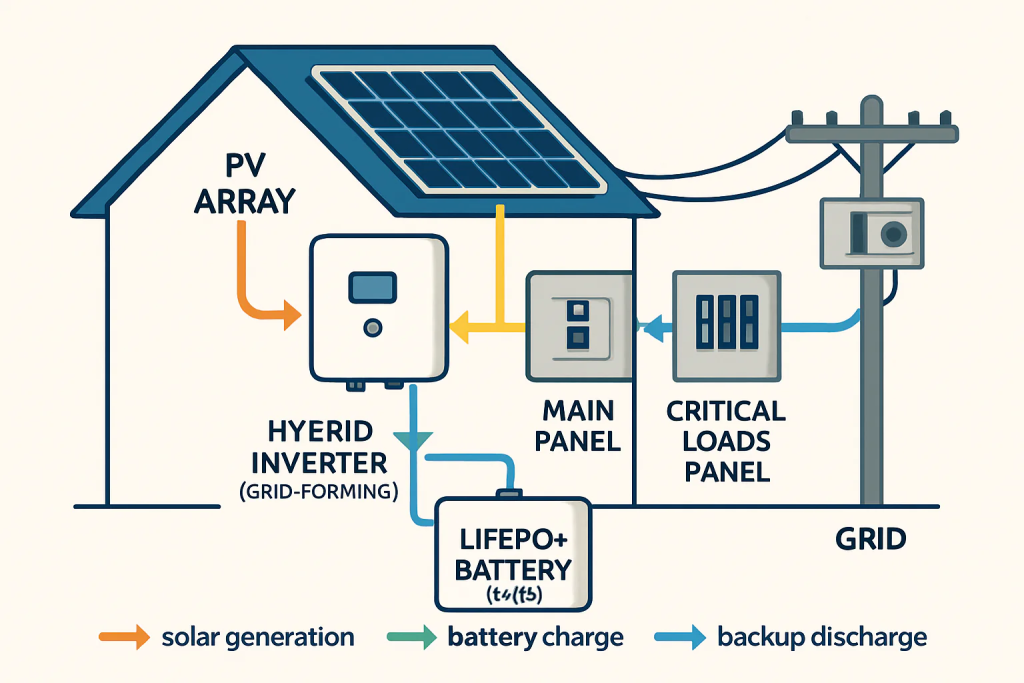
During the day, solar panels generate electricity that can power appliances directly or charge the battery. When the sun is unavailable or the utility grid fails, the stored energy in the battery supplies power to essential loads.
Unlike traditional generators, solar backup systems operate quietly, produce no emissions, and require much less maintenance.
Why Are Solar Backup Systems Becoming More Popular?
Power interruptions caused by severe weather, aging infrastructure, and rising electricity costs have increased the demand for backup energy solutions.
Solar power backup systems offer several benefits, including:
- Reliable electricity during outages
- Reduced dependence on the utility grid
- Lower electricity bills
- Improved energy independence
- Reduced carbon emissions
- Long-term cost savings
For homeowners and businesses seeking stable and clean energy, solar battery backup systems are becoming an increasingly attractive investment.
What Components Make Up a Solar Power Backup System?
A complete solar backup system typically includes:
Solar Panels
Solar panels capture sunlight and convert it into electricity.
Battery Storage System
The battery stores excess energy for use at night or during grid failures. Lithium iron phosphate (LiFePO4) batteries are widely used due to their long lifespan and high safety performance.
Inverter
The inverter converts direct current (DC) into alternating current (AC), allowing household appliances and equipment to operate normally.
Battery Management System (BMS)
The BMS monitors battery performance and protects against overcharging, overheating, and over-discharging.
Energy Management System (EMS)
The EMS optimizes energy usage and improves overall system efficiency.
How Long Can a Solar Backup System Provide Power?
Backup duration depends on several factors, including:
- Battery capacity
- Household energy consumption
- Number of connected appliances
- Solar generation conditions
For example:
A 5kWh battery may provide several hours of backup for essential loads.
A 10kWh battery can support lighting, refrigerators, and communication devices for an extended period.
Larger battery systems can provide whole-home backup or support commercial operations.
Proper system sizing is essential to ensure reliable power during emergencies.
What Appliances Can a Solar Backup System Power?
Depending on battery capacity, a solar backup system can power:
- LED lighting
- Refrigerators and freezers
- Wi-Fi routers and communication devices
- TVs and computers
- Security systems
- Water pumps
- Air conditioners and other large appliances
Many homeowners prioritize critical loads to maximize backup duration.
Are Solar Backup Systems Safe?
Modern solar battery systems are designed with multiple safety protections.
Advanced systems may include:
- Battery management systems (BMS)
- Temperature monitoring
- Smoke detection
- Automatic fire suppression systems
- Overcurrent and short-circuit protection
- Intelligent cooling systems
These features help ensure safe and stable operation over many years.
Can Solar Backup Systems Work During Power Outages?
Yes. However, not all solar systems can continue operating during a blackout.
Traditional grid-tied solar systems automatically shut down when the utility grid fails. To maintain power during outages, a battery storage system and a hybrid inverter are usually required.
This allows stored energy to continue supplying electricity to the home or business even when the grid is unavailable.
Is a Solar Power Backup System Worth the Investment?
Although the initial installation cost can be significant, the long-term benefits often outweigh the expense.
A solar backup system can help:
- Reduce monthly electricity bills
- Protect against rising utility prices
- Increase energy security
- Enhance property value
- Provide peace of mind during emergencies
For businesses, battery storage can also reduce peak demand charges and improve operational reliability.
How to Choose the Right Solar Backup System
Before purchasing a system, consider the following factors:
- Daily energy consumption
- Required backup duration
- Available installation space
- Local climate conditions
- Battery type and lifespan
- Future expansion requirements
- Budget and return on investment
Working with an experienced supplier can help ensure the system is properly designed and optimized for your specific needs.
Conclusion
A solar power backup system is more than just an emergency power source. It is a smart investment that improves energy reliability, reduces electricity costs, and supports a more sustainable future.
Whether for residential or commercial applications, understanding how solar backup systems work and choosing the right configuration can help you maximize the benefits of clean and dependable energy. As battery technologies continue to advance, solar power backup systems are expected to play an increasingly important role in the global energy transition.
FAQs
1. What is a solar power backup system?
A solar power backup system combines solar panels, batteries, and an inverter to provide electricity during power outages or periods of high energy demand. It helps improve energy independence and reduce reliance on the utility grid.
2. How does a solar power backup system work?
Solar panels generate electricity during the day, and excess energy is stored in batteries. When the grid goes down or sunlight is unavailable, the stored energy is used to power appliances and essential loads.
3. Can a solar power backup system work during a power outage?
Yes. Systems equipped with battery storage and a hybrid inverter can continue supplying electricity during grid failures, ensuring uninterrupted power for critical devices.
4. How long can a solar battery provide backup power?
Backup duration depends on battery capacity and energy consumption. A larger battery can provide power for several hours or even multiple days when combined with solar panels.
5. Will solar panels charge batteries on cloudy days?
Yes. Solar panels still generate electricity on cloudy days, although energy production is lower compared with sunny conditions.
6. Do solar backup systems work at night?
Yes. Batteries store energy generated during the day and can supply electricity at night or whenever sunlight is unavailable.