

Table of Contents
Mining operations are among the most energy-intensive industries in the world. From drilling and crushing to processing and transportation, a reliable power supply is essential to maintain productivity and avoid costly downtime. However, many mining sites are located in remote areas where grid access is limited or unavailable, making diesel generators the traditional source of electricity.
Today, more mining companies are turning to Battery Energy Storage Systems (BESS) to improve energy reliability, reduce fuel consumption, and support sustainability goals. As renewable energy technologies continue to advance, battery storage is becoming a key component of modern mining operations.
Why Do Mining Sites Need Battery Energy Storage Systems?
Mining facilities operate around the clock and require stable electricity to keep equipment running efficiently. Power interruptions can lead to production losses, equipment damage, and increased operating costs.
A battery energy storage system provides several advantages:
- Continuous and reliable power supply
- Reduced dependence on diesel generators
- Lower fuel and maintenance costs
- Better integration with solar and wind energy
- Improved energy efficiency and peak load management
- Reduced carbon emissions
These benefits make battery storage an increasingly attractive investment for mining companies worldwide.
Reducing Diesel Fuel Consumption and Operating Costs
Diesel generators have long been the primary power source for remote mines. While effective, they come with several challenges:
- High fuel costs
- Expensive transportation of diesel to remote locations
- Frequent maintenance requirements
- Exposure to fuel price fluctuations
By integrating battery storage system with diesel generators, mines can significantly reduce generator runtime. Batteries supply energy during peak demand periods and store excess energy when consumption is low.
As a result, mining companies can:
- Save on fuel expenses
- Extend generator lifespan
- Lower maintenance costs
- Improve overall energy efficiency
For large-scale operations, these savings can translate into millions of dollars over the life of the project.
Supporting Solar and Hybrid Power Systems
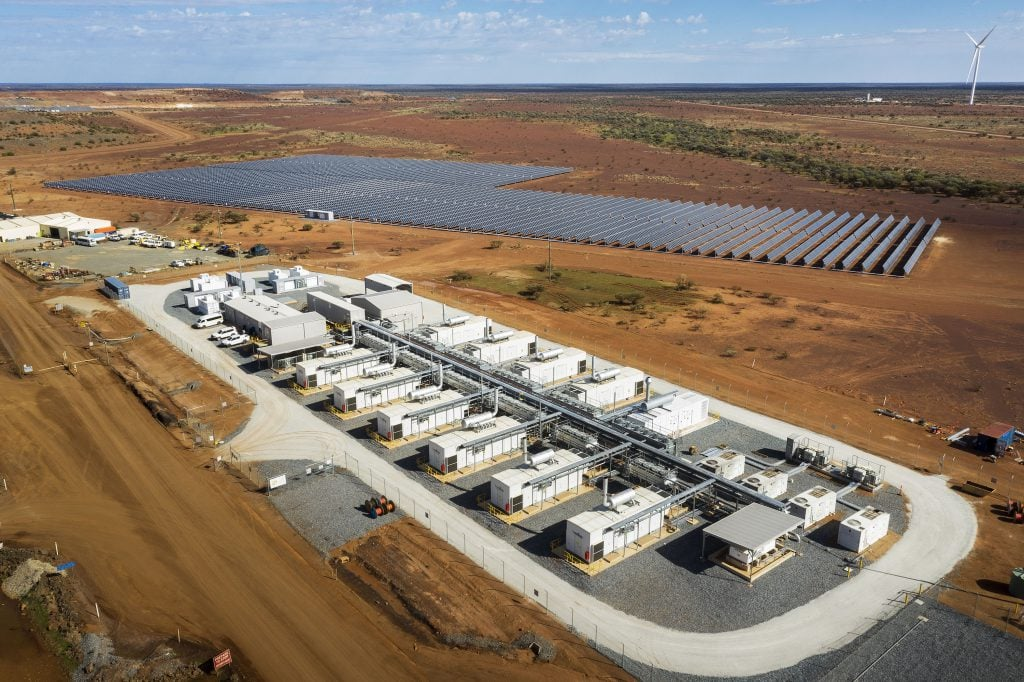
Many mining companies are now installing solar photovoltaic systems to reduce energy costs and environmental impact. However, solar power is intermittent and cannot provide electricity at night or during cloudy weather.
Battery energy storage systems solve this challenge by storing excess solar energy generated during the day and supplying power when solar production decreases.
A hybrid system consisting of:
- Solar panels
- Battery storage systems
- Diesel generators
creates a highly reliable microgrid capable of delivering stable power 24 hours a day.
This approach helps mines maximize renewable energy usage while minimizing fuel consumption.
Improving Power Reliability in Remote Locations
Remote mining operations often face unstable grid conditions or have no grid connection at all. Even short power interruptions can halt production and cause significant financial losses.
Battery storage systems provide:
Backup Power
In the event of generator failure or grid outages, batteries can instantly deliver electricity to critical loads.
Peak Shaving
During periods of high electricity demand, stored energy can be discharged to avoid overloading generators and reduce peak power costs.
Frequency and Voltage Stabilization
BESS helps maintain power quality, ensuring sensitive equipment operates safely and efficiently.
These capabilities improve overall operational reliability and reduce downtime.
Meeting Sustainability and ESG Goals
Environmental, Social, and Governance (ESG) standards are becoming increasingly important for mining companies. Investors, governments, and customers are placing greater emphasis on reducing carbon emissions and promoting sustainable practices.
Battery energy storage systems help mining companies:
- Lower greenhouse gas emissions
- Reduce diesel consumption
- Increase renewable energy penetration
- Support carbon neutrality initiatives
By adopting cleaner energy solutions, mining operators can strengthen their ESG performance and enhance their reputation in global markets.
Increasing Equipment Efficiency
Mining equipment such as crushers, conveyors, pumps, and processing plants often experience sudden changes in power demand. Batteries can respond instantly to these fluctuations, ensuring stable energy delivery and preventing unnecessary strain on generators.
This leads to:
- Improved equipment performance
- Reduced wear and tear
- Longer asset life
- Lower maintenance costs
Ultimately, better power management translates into higher productivity and lower operational expenses.
Containerized Battery Storage for Large Mining Projects
Containerized battery energy storage systems are becoming a popular choice for mining applications. These systems are pre-engineered and can be deployed quickly with minimal site preparation.
Advantages include:
- Modular design for easy expansion
- Fast installation and commissioning
- Integrated Battery Management System (BMS)
- Enhanced safety protection
- Suitable for harsh environments
- Scalability from hundreds of kilowatt-hours to multi-megawatt-hour systems
Containerized BESS solutions are particularly suitable for remote mining projects where flexibility and reliability are critical.
The Future of Energy in Mining
As energy prices continue to rise and sustainability targets become more ambitious, battery energy storage systems are expected to play an increasingly important role in the mining sector.
The combination of solar power, battery storage, and conventional generators enables mining companies to achieve:
- Lower energy costs
- Higher power reliability
- Reduced emissions
- Greater operational efficiency
- Long-term energy independence
For mining operators seeking to improve profitability while embracing cleaner energy solutions, battery energy storage systems are no longer just an option—they are becoming a strategic necessity.
Conclusion
Battery Energy Storage Systems are transforming the way mining companies manage energy. By reducing diesel consumption, supporting renewable energy integration, improving reliability, and helping achieve ESG goals, BESS offers a practical and cost-effective solution for modern mining operations.
As the global mining industry moves toward a more sustainable future, battery storage technology will continue to be a driving force behind efficient, resilient, and environmentally responsible energy systems.
FAQs
1. Can battery storage replace diesel generators in mining operations?
In many cases, battery systems work alongside diesel generators and solar power to form hybrid microgrids. Completely replacing diesel generators depends on the size and energy requirements of the mine.
2. How does battery storage reduce fuel costs?
Batteries store excess energy and supply electricity during peak demand, reducing generator runtime and fuel consumption.
3. What battery technology is commonly used in mining energy storage systems?
Lithium iron phosphate (LiFePO4) batteries are widely used due to their high safety, long cycle life, and excellent thermal stability.
4. Can battery storage systems work with solar power?
Yes. Battery storage systems can store excess solar energy and provide electricity when solar generation is unavailable, ensuring continuous power supply for mining operations.
5. Are battery energy storage systems suitable for remote mining sites?
Yes. Containerized BESS solutions are specifically designed for off-grid and remote applications, providing reliable power under harsh environmental conditions.