

On January 19, 2026, the Guiding Opinions on Carrying Out Zero-Carbon Factory Construction—jointly issued by five government ministries—was officially released. This document marks the first time a systematic roadmap for the zero-carbon transformation of industrial enterprises has been planned at the national level.
The document clearly defines a "zero-carbon factory" as a facility that achieves a continuous reduction in on-site carbon dioxide emissions—approaching zero—through systematic technological innovation and management optimization.
It is no longer a distant ideal, but a tangible journey of continuously lowering carbon emissions—until they virtually reach zero—through innovations in technology and management.
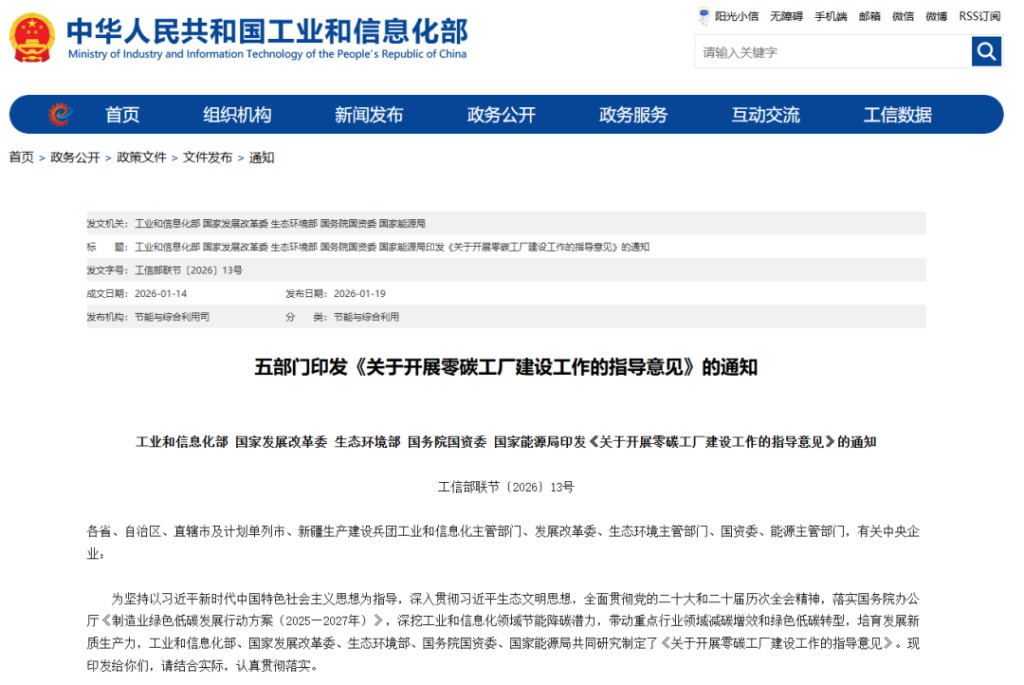
Establishing New Standards for Zero-Carbon Factories
The Guiding Opinions outline a comprehensive policy blueprint and practical roadmap for building zero-carbon factories in China, establishing a phased and systematic implementation plan.
The roadmap is clear: selecting benchmark examples in 2026; scaling up cultivation across seven key industries—including automotive, lithium batteries, and photovoltaics—in 2027; and tackling "hard-to-abate" sectors like steel and petrochemicals by 2030.
Its core logic can be summarized by four keywords: industry-specific strategies, innovation-driven approaches, maximum emission reduction, and unified standards.
The final point—"unified standards"—is particularly significant; it mandates the use of internationally recognized benchmarks for calculating and disclosing carbon emissions. This effectively establishes a universally accepted "yardstick" for measuring the "green content" of future Chinese manufacturing—ensuring data is traceable and verifiable, leaving no room for anyone to "muddy the waters" or cut corners.
Six Core Construction Pathways
So, what are the specific pathways to achieving these ambitious goals?
01 Accounting Systems Form the Foundation
Establish a carbon dioxide emission accounting system to identify and quantify emissions and removals, providing accurate, timely, and traceable data to support zero-carbon factory construction.
02 Energy Transition Is Key
While ensuring a secure supply of energy and electricity, factories are encouraged to transition to zero-carbon sources for electricity, heat, hydrogen, and fuel. Strategies include developing distributed photovoltaics, decentralized wind power, and biomass power generation tailored to local conditions, as well as exploring direct connections to green power to increase the share of renewable energy usage.
03 Process Optimization is the Core
Focus on the systematic optimization of production processes, synergistically advancing energy efficiency improvements and the decarbonization of technological workflows. Continuously conduct energy-saving and carbon-reduction assessments, implement technical upgrades and equipment renewals, and establish robust management systems for energy conservation and carbon reduction.
04 Full-Chain Collaboration is the Extension
Actively implement zero-carbon supply chain management by sourcing green, low-carbon products and utilizing green logistics. Increase the proportion of clean transportation and drive upstream and downstream partners in the industrial chain to adopt energy-saving and carbon-reduction measures, fostering collaborative decarbonization.
05 Smart Control is the Enabler
Implement the Guidelines for the Construction of Digital Energy and Carbon Management Centers for Industrial Enterprises and Parks. Leverage technologies such as the Industrial Internet, the Internet of Things (IoT), and big data to build and operate digital energy and carbon management centers. This enables precise measurement, refined control, intelligent decision-making, and visual presentation of energy consumption and carbon emission data.
06 Information Disclosure Completes the Loop
Once a factory has maximized autonomous emission reductions—reaching a point where further internal cuts are no longer feasible—remaining carbon emissions can be offset through mechanisms such as cross-border carbon trading, thereby achieving and maintaining near-zero carbon emissions.
Photovoltaics: A Key Driver of Policy-Backed Energy Transition
In the blueprint for zero-carbon factories, photovoltaic (PV) technology holds multiple strategic values, serving as one of the most viable pathways for achieving energy transition.
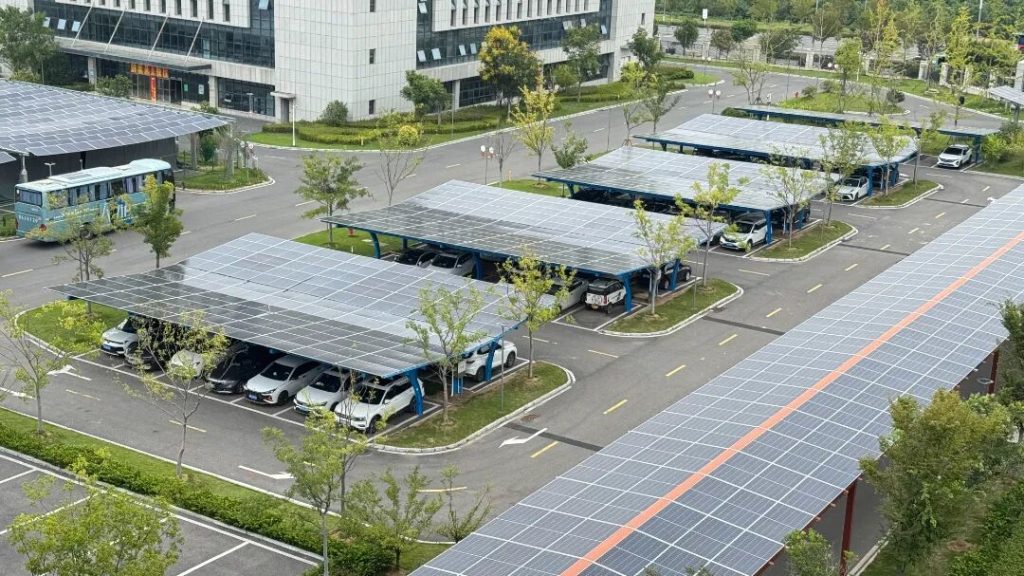
Distributed PV is prioritized as the preferred solution for "decarbonization at the source." Installing PV systems on factory rooftops, carports, and unused land has become a standardized, policy-encouraged decarbonization measure, directly aligning with the national mandate to build "factory energy systems centered on renewable energy."
The "PV plus energy storage" microgrid model is crucial for enhancing energy autonomy. The Guiding Opinions explicitly encourage the construction of green industrial microgrids that integrate PV, energy storage, and high-efficiency heat pumps. This model not only significantly boosts the proportion of green electricity used by factories but also creates additional economic value by participating in demand response through energy time-shifting.
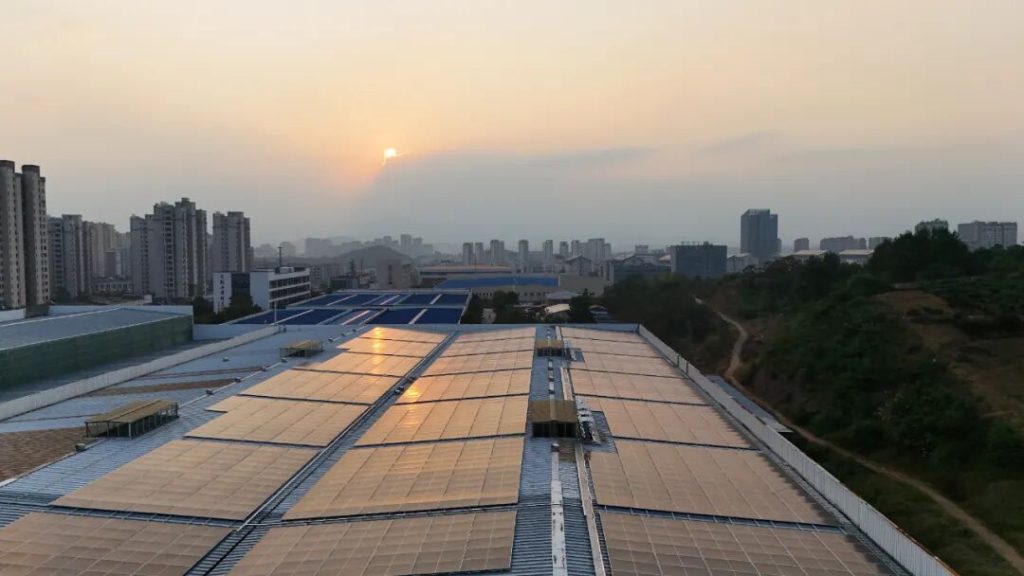
For the PV manufacturing industry, this policy carries dual significance. It implies that PV enterprises must not only use their products to facilitate the transformation of other industries but also take the lead in "revolutionizing themselves" by achieving zero-carbon production processes. This closed-loop approach—"using green to manufacture green"—may well serve as a vivid illustration of "new quality productive forces." Image
Energy Transition Service Provider — Toyon Energy
With new policies now in effect, what enterprises truly need is not merely a simple equipment supplier, but an energy solution partner capable of understanding policy intent, grasping industry pain points, and providing long-term support.
As an energy service provider deeply rooted in Anhui for years, Toyon Energy has established a comprehensive presence across the entire value chain—spanning investment, development, construction, and operations. Our business footprint covers residential green power, multi-energy complementary systems for industrial and commercial sectors, smart O&M, and even overseas markets, positioning us as a professional, comprehensive service provider amidst the wave of green energy transition.
We offer customized services for the design, construction, and operation of distributed photovoltaic power plants. We also plan and integrate green microgrid solutions featuring energy storage systems to maximize factory energy self-sufficiency and cost-efficiency, directly responding to the policy call for "carbon reduction at the source."
Ultimately, the era of the "zero-carbon factory" has arrived. It represents a new industrial race that is redefining the very meaning of "manufacturing."
Enterprises that take the lead in transforming rooftop sunlight into green competitiveness—and integrating carbon emission management into their production processes—will gain more than just an eco-friendly reputation; they will secure the key to future markets.
This evolution has no finish line, and we are committed to being a steadfast partner throughout this journey.