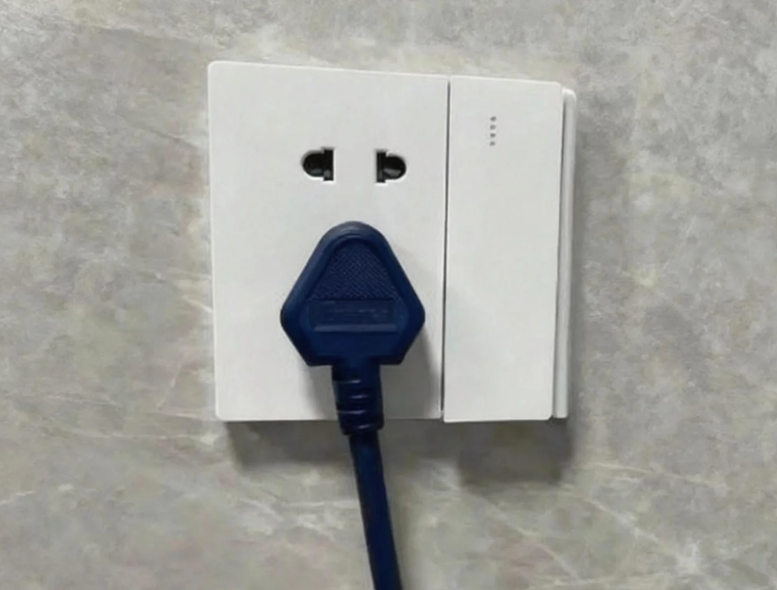
As the photovoltaic (PV) industry shifts from large-scale power plants to individual households, balcony PV systems are quietly emerging as a form of "new infrastructure" that allows urban families to participate in the energy transition. It is not only an economical choice for reducing electricity bills but also represents a sustainable lifestyle.
What are the main concerns before installing a balcony PV system?
Is my balcony suitable for PV installation? What conditions must be met?
① Orientation and Sunlight: South, southeast, or southwest facing is ideal; requires at least 3 hours of effective daily sunlight.
② Load-bearing Safety: The railing or exterior wall must support the weight of the modules (approx. 15–30 kg/m²).
③ No Obstructions: Avoid shading from trees or nearby buildings.
④ Compliance: Must be permitted by property management and comply with local housing and construction regulations (e.g., restrictions on facade modifications).

What equipment is typically included in a balcony PV system?
Core components include:
① PV modules;
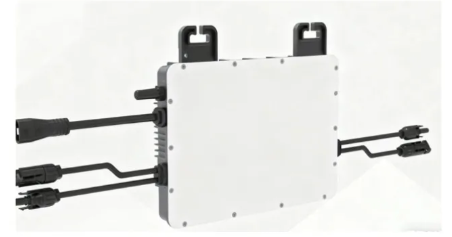
② Micro-inverter;
③ Mounting brackets;
④ Cables and junction boxes;
⑤ Optional accessories: Energy storage batteries, smart monitoring apps.
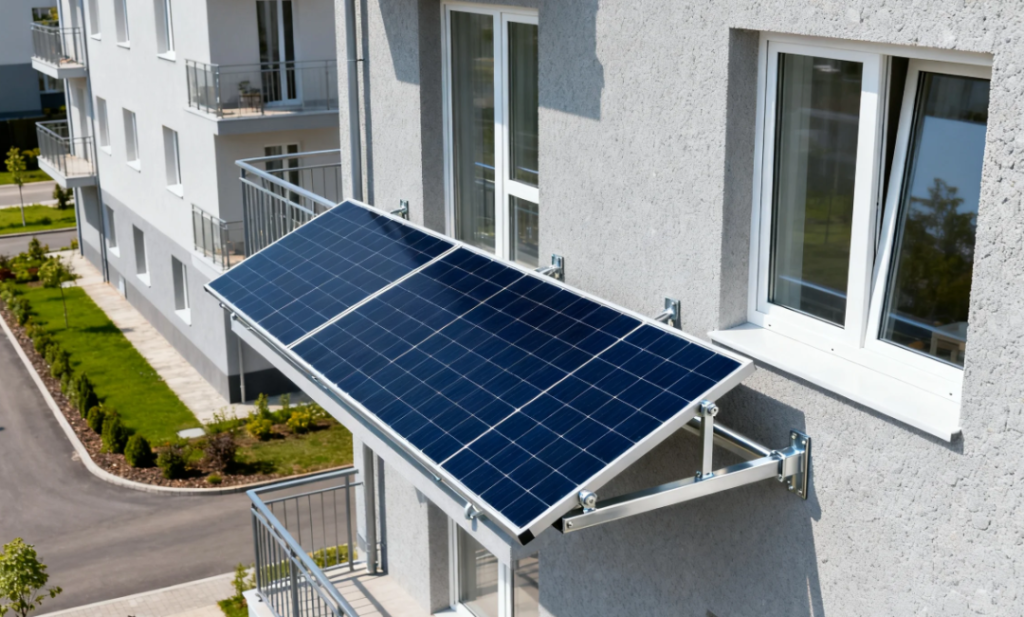
How much electricity can a balcony PV system generate in a year?
Taking three 500W modules (totaling 1.5 kW) as an example, in a region with moderate sunlight (1,200 hours of annual sunshine), the annual generation is approximately:
1.5 kW × 1,200 hours = 1,800 kWh, equivalent to the electricity consumption of an average household for 3–4 months. Actual output depends on location, season, and shading.
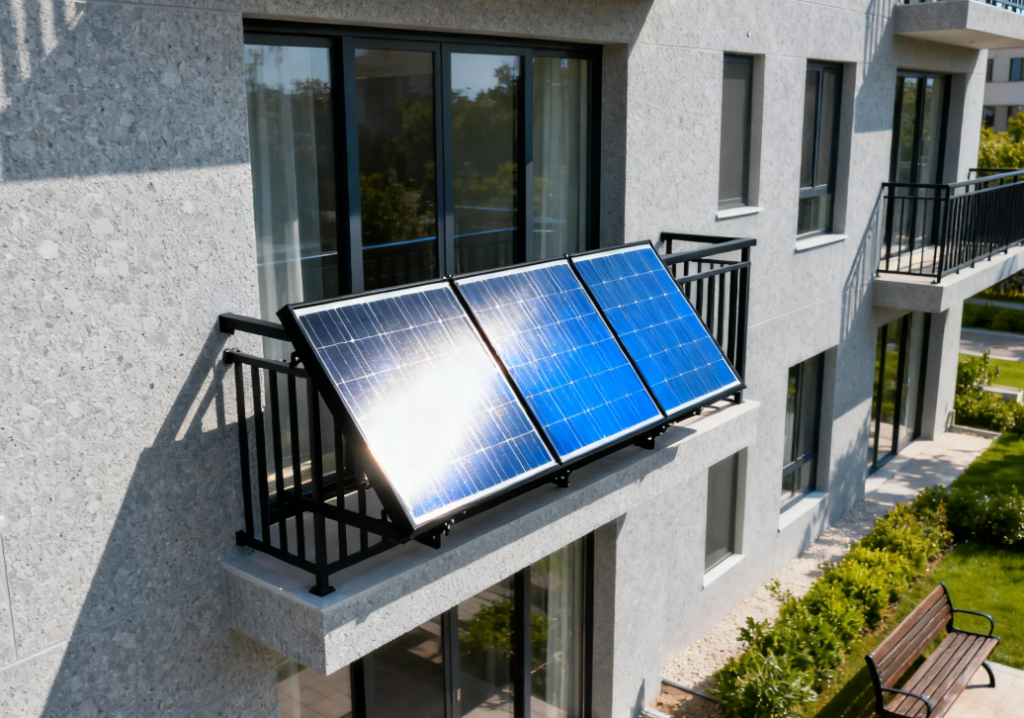
Do I need to apply for grid connection? What is the process?
Yes, an application is required (to ensure the legality of feeding surplus power back to the grid).
Process:
① Notify property management;
② Submit a grid-connection application to the local power supply bureau;
③ After installation, the power utility conducts an inspection and installs a bi-directional meter;
④ Sign a power purchase agreement. Some cities allow "approval-free" installation for low-capacity systems, but local policies should be verified in advance.
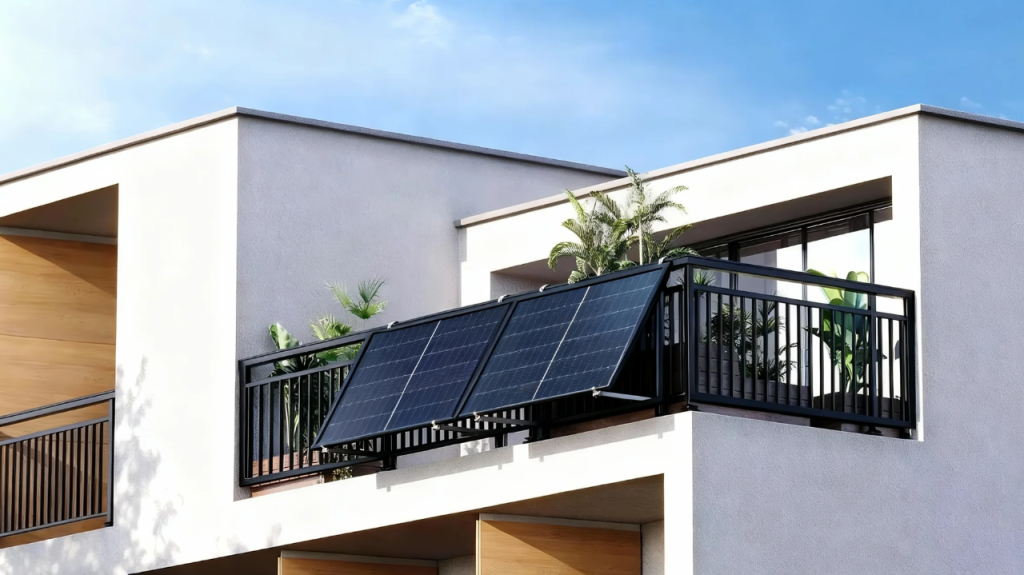
Could a balcony PV system cause electric leakage, lightning strikes, or fires?
Proper installation carries minimal risk, but the following points should be noted:
① Electrical leakage/fire: Use certified equipment, waterproof all wiring connections, and prevent cable aging;
② Lightning protection: No additional installation is required if the building already has a lightning protection system;
③ Wind resistance: The mounting structure must withstand local peak wind speeds (e.g., Category 12 typhoons);
④ Leakage protection: Installation of a residual current device (RCD) is recommended.
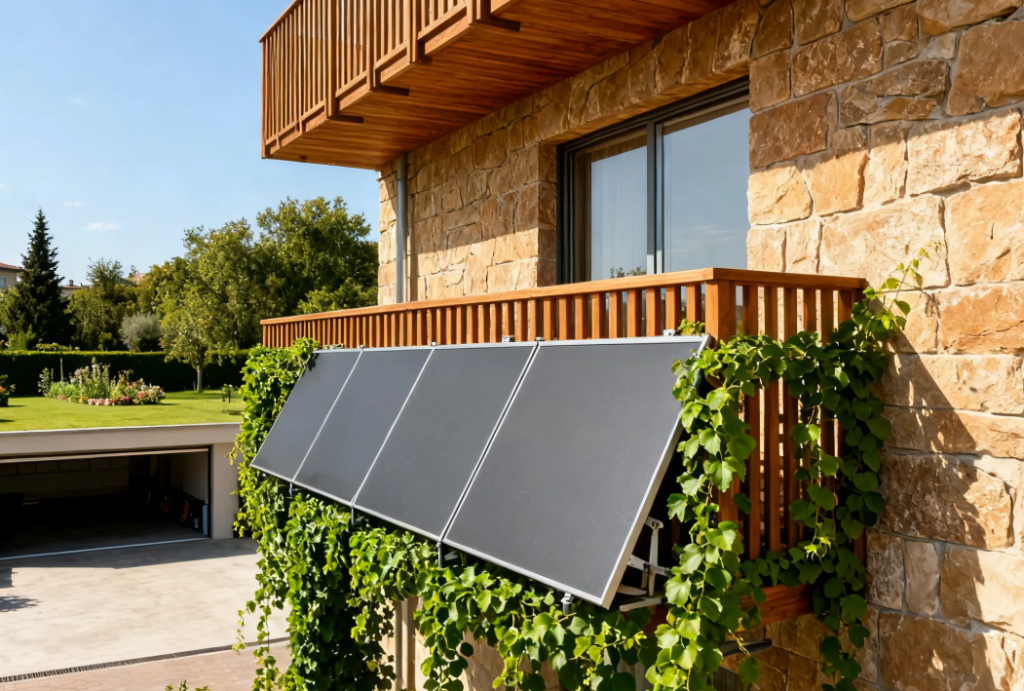
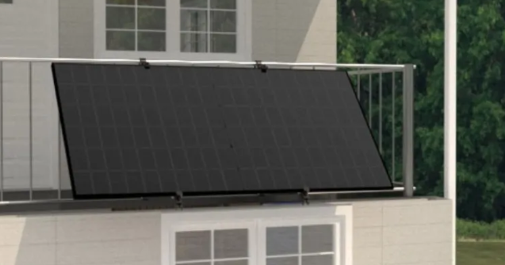
Steps for installing a balcony PV system—set up your system with ease:
Install mounting brackets and PV modules
Install the micro-inverter
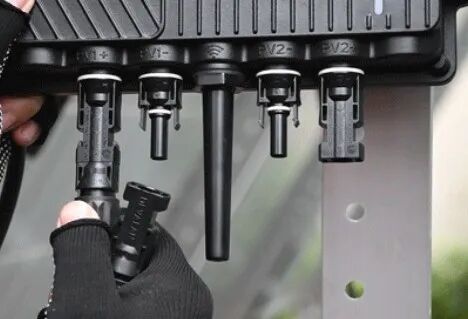
Perform wiring
Install the anti-backflow device
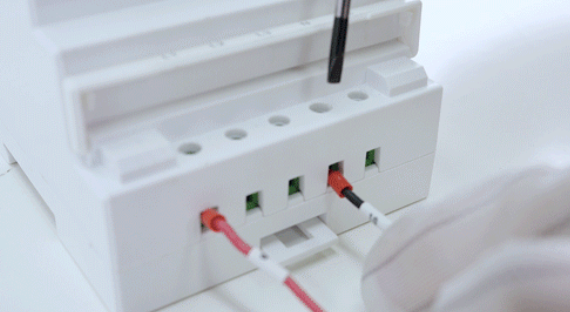
Power-on test