

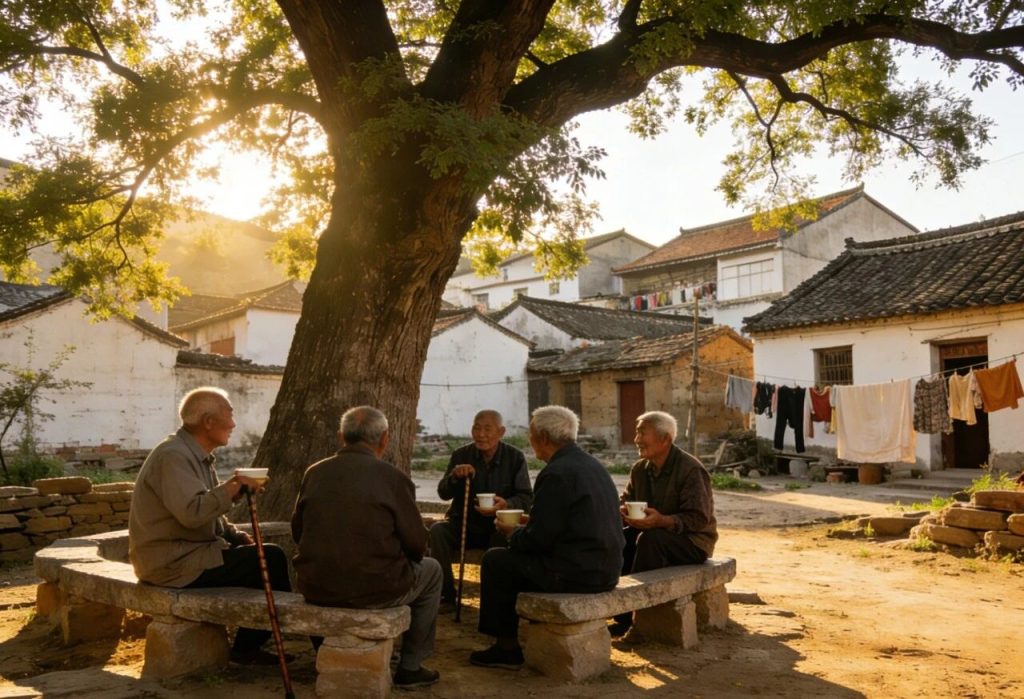
An elderly person basking in the sun against an earthen wall is a familiar scene in China's countryside. Yet, while the sunlight warms their faces, it fails to fill their wallets; for the nation's more than 120 million rural elderly, the average monthly pension is a mere 287 yuan—barely enough to cover basic subsistence. Today, we explore an innovation in elderly care that turns sunlight into cash and rooftops into assets.
Can a 287-Yuan Monthly Pension Ensure a Secure Retirement?
Across China's vast rural landscape, the reality for countless residents involves being left behind, returning home after years away, and facing uncertainty about future security as they age. They hold fast to their old homes and the courtyards they spent a lifetime building, yet they cannot secure a stable pension to support their later years. my country is facing a pronounced aging trend; data from the National Bureau of Statistics indicates that by the end of 2025, the elderly population aged 60 and above will reach 320 million, accounting for 23% of the total population. Approximately 180 million people receive the basic pension for urban and rural residents, with farmers making up more than 70% of this group.
However, in 2025, the average monthly pension for urban and rural residents stood at just 287 yuan, whereas the average monthly benefit for urban employees' pension insurance reached 3,498 yuan—a gap of more than twelvefold. While the rural economy is becoming increasingly vibrant thanks to the vigorous promotion of rural revitalization, the development of elderly care service systems still has a long way to go. Consequently, the question of where to find the necessary funds remains the most difficult challenge in rural elderly care. As the roof tiles age day by day, the sunlight shining overhead represents a resource that could—and should—be monetized. To address this challenge, Toyon Energy has proposed a new solution:
From "Renting Roofs" to "Gifting Power Plants": Making Sunlight Truly One's Own
Residential photovoltaic (PV) systems—acting as "piggy banks on the roof"—offer a fresh approach to solving the rural elderly care dilemma. These PV power plants not only generate stable monthly cash flow but also increase property value, becoming a family asset that can be passed down to future generations. However, traditional residential PV models suffer from significant limitations. Under the traditional "roof leasing" model, companies leased farmers' roofs to install power plants; while farmers received fixed annual rent, the company retained ownership, meaning farmers might not actually own the system even after the 25-year lease expired. Furthermore, rental income was meager—based on a typical roof area of 100 square meters, the annual return was only around 500 to 750 yuan.
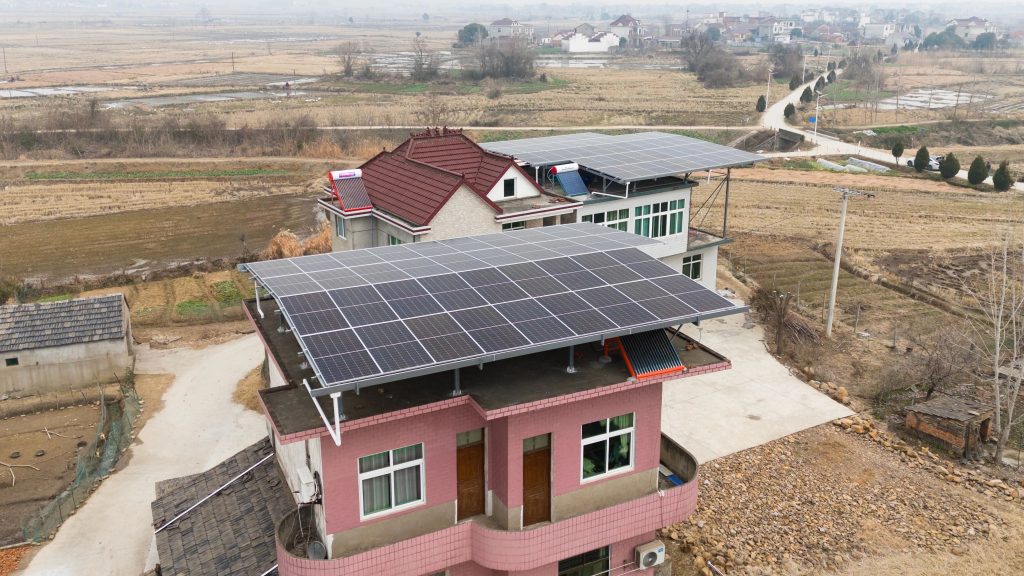
Drawing on years of industry expertise, Toyon Energy has innovatively launched the "Power Plant Gifted After Ten Years" residential PV product, effectively ending the "roof leasing" era. The core breakthrough of this model is that the power plant is built for free; for the first ten years, you enjoy either rental income or free electricity, and after ten years, the majority of the revenue goes to you. This transforms farmers from passive lessors of resources into true asset owners, allowing them to fully reap the development dividends of new energy.
Any concerns?
Even after the power plant is gifted to you, we continue to provide operation, maintenance, and management services, ensuring you enjoy the returns without the hassle. Crucially, Tongyuan New Energy plans to aggregate PV generation from thousands of households into a large-scale energy matrix. These plants can participate in unified electricity market trading—leveraging mechanisms like peak shaving and demand response—to generate continuous value in a competitive market. This means your power plant not only generates electricity reliably but also has the potential to earn increasing returns in the future electricity market. We offer two models—which one suits your household best?
① The "Full Grid-Feed" model is ideal for households with low electricity consumption; all generated power is sold to the State Grid, ensuring fixed, reliable returns.
② The "Worry-Free Consumption" model suits households with high electricity usage; you use the self-generated power during the day and sell the surplus—the more you use, the more you save!
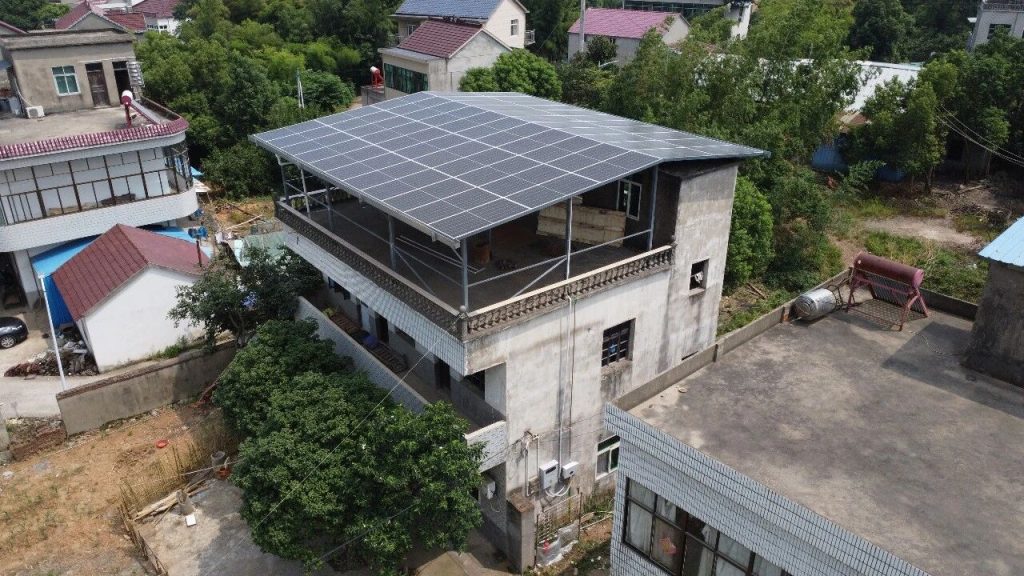
Take the case of Mr. Wang, a 45-year-old resident of Anhui: He installed 50 PV panels, generating approximately 37,000 kWh annually. Under the "self-generation and self-consumption" model, he saves at least 500 yuan in electricity costs annually for the first ten years. After ten years (when he is 55), he is projected to earn 7,000 yuan annually in revenue—benefits he will enjoy for another twenty years (until he is 75)—resulting in a total cumulative return of approximately 145,000 yuan. In contrast, consider "Big Brother Wang," who pays 200 yuan annually into his pension scheme for 15 years, only to receive less than 200 yuan per month upon retirement—whereas the returns from the photovoltaic (PV) system exceed his pension income by 110,000 yuan!
Five Major Advantages, All-in-One Solution
Advantage 1: Zero-cost investment, no financial burden
Farmers need only provide clear proof of property rights; no capital outlay, loans, or deposits are required, truly enabling "zero-cost participation and zero-risk returns."
Advantage 2: Returns far exceed traditional PV leasing models
The cumulative electricity revenue from the PV plant over 30 years is nearly ten times higher than the rental income from traditional leasing models, making it a truly reliable product for rural revitalization.
Advantage 3: Backed by a listed company brand with a lifetime warranty
Strict quality control is maintained from equipment to installation, ensuring farmers can install and use the system with confidence and peace of mind.
Advantage 4: High-standard construction—aesthetically pleasing and waterproof
Utilizing high-standard construction techniques, the mounting system integrates seamlessly with the roof; rather than damaging the existing waterproofing layer, it provides an additional layer of protection.
Advantage 5: Thermal insulation, energy savings, and extended roof lifespan
In summer, PV panels effectively block direct sunlight, lowering indoor temperatures by 3–5°C and reducing air conditioning energy consumption; in winter, they help retain heat.
The key to rural revitalization lies in providing farmers with stable, sustainable income sources. Across rural areas, there is no shortage of rooftops or sunlight—what is missing is a mechanism to monetize that sunlight. Toyon Energy’s "Decade-Long Power Station" model leverages sunlight to deliver a stable, reliable income stream that truly belongs to the farmers.